•  •  •  •  •  •  •  •  •  •  •  •  •  •  •  •  •  •  •  •  •  •  •  •  •  •  •  •  •  •  •  •  •  •  •  •  •  •  •  •  •  •  •  •  
We're campaigning for a Special DVD edition of "The Night of the Hunter": Join the cause!
•  •  •  •  •  •  •  •  •  •  •  •  •  •  •  •  •  •  •  •  •  •  •  •  •  •  •  •  •  •  •  •  •  •  •  •  •  •  •  •  •  •  •  •  

Wednesday, February 11, 2015

February is Laughton season in New York!

Charles:
«I was the guest of the Savage Club in London, and Sir Austin Chamberlain made a speech. I was sitting next to Nelson Doubleday, the publisher. Sir Austin was polite and polished and imperturbable. At the end of the speech Nelson Doubleday said to me, “Charlie, however thin you cut it, it’s still baloney,” and I suddenly wanted to get on a boat and get back to New York so bad I could taste it»

That’s Laughton in 1962, reminiscing about his early infatuation with New York, which lasted about a lifetime(1), and this month, Film Forum in New York is returning this love multiplied with an intense three-week season(2) in which lucky New Yorkers will have the rare chance of treating themselves with some of Charles’ finest performances in the big screen: I must say that this is possibly the most substantial Laughton film season since the one BFI devoted to him in 1987, so go and see it if you can!

I learned of this through one of my favourite film bloggers, the Self-Styled Siren, who has written a great post about Charles which you shouldn’t miss: It is a well-sourced, exquisitely written and very informative post full of heart and appreciation from a long-time fan, of which I would like to single out this paragraph:
«Those who talk only of the single film Laughton directed, and shrug off the rest, are making a grave mistake. Laughton the director could never have made the shimmering, perfect thing that is Night of the Hunter, if it hadn’t been for Laughton the actor.»

Second best film ever?
A few years ago, a pannel of critics were asked by cahiers du Cinema to make a list of their 100 favourite films, or rather, to propose 100 films for an ideal cinematheque: I was mighty pleased to see The Night of the Hunter ranked as 2nd best film… It made me think that Cahiers was a magazine aligned with the auteur theory, and recall that in the contemporary review by François Truffaut of NOTH, which even though it was rather positive about Charles opera prima, there was a somewhat snide comment regarding Laughton’s career as an actor.

For auterists, Laughton was just that flamboyant thespian: Hitchcock and Sternberg lambasted him, didn’t they? So of course there was no need whatsoever for years to check the other side’s version. Until NOTH became, first a cult movie and then made a big comeback to be rediscovered by a new generation of critics and filmgoers, and then, Laughton became an auteur and, Oh the irony, he was praised from the same quarters where once he had been berated. As the Siren states above, if you love the film he directed, you should rediscover the actor as well.

Back to NOTH: much as I love the film, it being in the second place of a list is not without risk: the world is full of people that will see it just because, you know, that silver medal, and then might like it but not as much as other great movie and classify it with a “meh”. I have to confess that the first time I saw the film, I was so full of trepidation about finally being able to see it, that my actual enjoyment on the film came a few weeks after, when I saw it again, this time focusing just in seeing the film and not kneeling in front of a sacred object.

My advice is to take the list as a sample of good films, but then dismiss any expectation and just see them as the director wanted you to see it, the way he told Lillian Gish he would like you to see it:
Charles Laughton said that when he went to the movies as a young man, "We sat like this. [Assumes an awe-struck pose.] Now they sit and eat popcorn. I want to make them sit up in their seats again!" And he did, when he directed The Night of the Hunter”(3)

Beyond the blog
I know that this blog has been dormant for quite some time, mostly because of me being a bit downhearted about the state of the economy, not because of lack of Laughton-related items to talk about, of which I have a rather long list of items to deal with.

Anyway, recently I have started to pick things up and among them I started to write book reviews elsewhere: among them there is a review of Kirk Douglas' I am Spartacus, his memoirs from the epic making, which for me had some interesting points regarding this old post. An English version of that review is on my to-do list for this blog.

Another bit of news is that this blog has started tweeting around as @RootnxLaughton for any news related to Charles in some way or another.

There’s also a bit of Tumblr thing I started some time ago which needs some straightening up: I will let you know when it is working properly.

See you again (I hope), soon!

Notes:
1) Charles' one of the forewords to the anthology “The Fabulous country” (McGraw Hill Pub.)
2)Full details in this link: http://filmforum.org/series/charles-laughton-series
3) This quote comes from this interview with miss Gish.

Monday, February 21, 2011

The Case of the Lost Paradine scenes


Ann Todd and Charles relax between takes

Many of you may have probably read Hitchcok being quoted (ad nauseam) about his work with Laughton in Jamaica Inn. Such quotes have been historically used to berate Laughton and his work. Many people seem to forget that Hitchcock worked again with the "difficult" actor in The Paradine Case: Have you come across any complaint by Hitchcock about his work with Laughton in that film? Well, neither have I (so far). In the light of this, I guess that Hitchcock wasn't after all, that uncomfortable with Charles. This time things between the two Englishmen seemed to go smooth enough. Laughton was, as a matter of fact, the least of Hitchcock's concerns during the filming of The Paradine Case.

Hitchcock had trouble enough with the producer: David O'Selznick was writing (and re-writing) the script and was responsible for the final cut of the film, much to the director's chagrin. Also, he didn't like the casting for the leading parts: for the roles played by Gregory Peck, Alida Valli and Louis Jourdan, he actually wanted (but couldn't have) Laurence Olivier, Greta Garbo and Robert Newton... I, for one, think that we can only theorise about what a Garbo-Newton pairing could have been like, and believe that Jourdan suggested (better than Newton could have) the sexual ambiguity lurking under the valet's protestations of faithfulness to his deceased master. Peck is usually regarded by critics as a lesser counselor than the hypothetical performance by Olivier could have been, which reminds me of one critic's comment of how good Hellzapoppin could have been the Marx brothers starred in it (conveniently forgetting that Olsen and Johnson originated the show in Broadway).

The Paradine Case was the last film Hitchcock would do for Selznick, and not a fulfilling piece of work for him. It's no wonder that it wasn't among his favourites, and he would dismiss it on interviews. I personally think it's far from a bad film (a second rate Hitchcock is still more interesting than some other directors' first rate output) and can boast a handsome (and appropiately cold and somber) cinematography by Lee Garmes, an evocative score by Franz Waxman and engaging performances by the secondary players: Laughton in particular delineates a merciless portrait of stern justice with a touch of perversion (Lord Horfield's blunt flirtatiousness to Gay Keane -Ann Todd- seems to be a wink to the director's own obsessions)


Deleted scene: The defender and the judge in the art gallery


Hitchcock, and an unidentified crew member, prepare the scene with Gregory Peck and Laughton

The Barrymore nomination mystery
Since this post is meant to be part of a Blogathon devoted to film preservation, I'd like to to mention that some of the scenes deleted from the film's final cut have not been lost, the bad news being that there aren't any plans (to the best of my knowledge) for that footage to be used in a restoration or re-release of the film. Any discerning reader will have probably reached the conclusion that there was a lot of Laughton there (Yep, there is!)

These scenes also explain something that puzzled Calum Reed here: How Ethel Barrymore could have received an Oscar nomination for the film, having only a few scenes with little dialogue? Well, because she had originally more screen time.

Steven De Rosa sheds further light here, providing us with the script of those scenes, which deepen in the relationship and personality of Lord Horfield and his wife, and could have contributed to make a more rounded film. The fascinating thing about them is that the Horfields relationship seems to offer a dark mirror to the Keanes' marriage. Horfield dislikes Keane's passionate defence of his customers, maybe because that remembers him of a (long-gone) time when he still regarded criminals as human beings, and from his wife we gather that he used to be a more empathic man in the past (and one must assume a past in which poor Sophy's spirit had not been yet suffocated by years of marriage).


"Have you noticed how much the nuts resemble the human brain, Sophy? Which reminds me... What about comitting you to the nut house, darling?"

Horfield reveals to Anthony Keane that he fears his wife is losing her mind, even though it's obvious that Sophie's concerns about her husband's disquieting satisfaction after sending someone to the gallows hint that she thinks that "Tommy" is not very sane himself: Is she really loosing her mind, or is she just a meek wife who's frightened stiff of the heartless monster her husband has become? Judge Horfield's is possibly more insane than his wife, but his insanity serves the system, while poor Sophie's compassion may be regarded by everyone else as an undesirable sign of weakness.

Here's hoping that some day these scenes leave the vaults. Is there enough Paradine love for a new, restored DVD release?

A handful of Paradine Links
(all in English, unless otherwise stated):
:: David Cairns analyzes the Paradine syndrome
:: Voiceover’s Blog reviews the film (Spanish)
:: Two pieces ar Rouge.com: Douglas Pye writes In and Around The Paradine Case, while Mark Rappaport writes on the director's viewpoint
:: Olivier Eyquem writes on The Paradine Case here and here (French)
:: Atikus writes on two courtroom films with Charles (Spanish)
:: Jennythenipper has a case against The Paradine Case
:: William Martell gives us another review
:: Nick Zegarac reviews the last DVD release of the film

This post was written to support the For The Love Of Film Noir Blogathon.


Blogathon links
:: More information at Ferdy on Films
:: More information at The Self-Styled Siren
:: The blogaton's own home blog
:: The blogathon's facebook page
:: The website of the Film Noir foundation which will restore this year's film.
:: If you want to contribute with some money, here's the donation link

Sunday, February 13, 2011

Isn't it romantic?


Ah, Maurice, you lucky rascal! (and Charles seems to be enjoying every bit of it!)

Valentine day approaches, girls and boys, and we're not above lovebirds, so let's do something romantic, such as displaying our love... for film.

As last year, the For the Love of Film - Film Preservation Blogathon strives to raise awareness and funds for old movies in danger of being lost forever.

You can join by posting an entry related to film noir in your blog from february 14th to february 21st and/or giving a donation which will help rescue and restore an old film for future viewers.


For further information, I refer you to the following links:
:: More information at Ferdy on Films
:: More information at The Self-Styled Siren
:: The blogaton's own home blog
:: The blogathon's facebook page
:: The website of the Film Noir foundation which will restore this year's film.
:: If you want to contribute with some money, here's the donation link (Don't forget to include it in your own blogathon post!)
:: You can also check Greg's blog Cinema Styles, where you can find graphics you can use for the blogathon, and a terrific blogathon trailer:


Thy'n truly will try to post summat next week

Friday, December 31, 2010

A few Laughtonian tips for New Year celebrations


Wishing you a happy New 2011 from the Cub Room, where -you know- the elite meet

I'd like to excuse myself with this blog's readership about the scarcity of posts and lateness of comment replies. Things have not been going well as far as work issues are concerned and I haven't been in the proper mood to update properly. I intended to make, at least, a big post saying how much I had liked the recent Criterion release of Night of the Hunter, but by (dis)courtesy of Barnes and Noble, I'm not expected to have my copy before I get my Valentines (By the way, If any of you has reviewed this release or knows of a dandy link about it, feel free to send it as I'll love to include it in the links section of that upcoming post).

Still, we'll be celebrating a new year tonight (which will be hopefully better that the year we're leaving behind), so let's drink and be merry for tomorrow we lie (with a hangover), and to this end we'll be giving some wise Laughtonian advice. Underage visitors are kindly discouraged to keep on reading: nothing for you here, kids, nothing for you...

We might start with Charles and Elsa's first trip to America, in which Charles played "Payment Deferred" in New York and Chicago. The couple had fond memories of his time by Lake Michigan, although Charles was surprised to find that local mobsters were not as colourful as he had portrayed them in Edgar Wallace's 1930 stage hit On The Spot: "I spent three weeks there without seeing a machine gun or hearing a gun shot" Charles would later reminisce.


Tony Perelli, or Capone according to Laughton

Elsa had some other anecdotes of the Prohibition era. On the occasion of a lone Transatlantic travel (Charles was left working in California), she entertained a couple of high society fellow travellers with stories such as the one about a little shop in Times Square which was...
(...) Just a hole in a wall with room for a narrow door. It sold only one thing –apparently reddish-purplish house bricks. Actually, they were dried pressed grapes, and round each brick was a label that read: "DO NOT put this in three quarts of water at a temperature of 76 degrees and leave uncovered for three weeks, then strain and over and leave for six more weeks, as it will become alcoholic AND THIS IS AGAINST THE LAW!"

She thought that New Yorkers had all "furry tongues and bad breath from drinking bathtub gin, which made plain tap water taste horrible", to which her rich acquaintance replied "Tap water, tap water, what does it taste like?

We have a useful tip by Charles' younger brother. When Charles, who was the elder son, relinquished his first-born right to direct the Pavilion Hotel of Scarborough in order to become an actor, his younger brother Tom was more than keen to take the post. As it turned, Tom may not been originally chosen by his parents for the job, but filled Charles' shoes quite efficiently, and possibly became a better (and more enthusiastic) hotelier than Charles would eventually have.

Tom left a book of memoirs in which he talks a bit about his famous brother, and mostly about his family's trade: his remarks on food and drink are quite worth reading, for he was as much a gourmet as his brother was, though of course he had by trade to oversee its quality on a daily basis to serve an important number of customers, so he was much more the pro in this regard.

Tom was keen on listening to the advice of those who worked for him, as in one occasion when he had to attend a party, and feared that the social obligation of drinking might obliterate his ability to attend the guests properly throughout the soirée (a situation in which many of us may find ourselves tonight). A butler gave him the advice of swallowing two desert spoonfuls of olive oil before drinking. This worked splendidly, though it must be said, much to Tom's regret:
(The party) was gay from the start, and still gayer as the party progressed, except for me. The butler's recipe was only too successful. For once in my life my capacity to take in alcohol was unlimited; it was passing through my stomach lined with with olive oil without getting into my blood stream. On the way home the roads were a sheet of ice, cars were skidding, and the car I was in did a double spin. What terrific fun for everyone, everyone except me –the only sobre one in the party. I have never taken precautions before going to a party since.

Anyway, whether your drinks are made from pressed grape bricks or not, and regardless of whether you take a spoonful of olive oil or none, celebrate and have fun tonight but drink wisely. And of course, don't drive drunk as the car might spin more than twice.


Be the soul of the party! Charles and Dean Martin on the sax, Dorothy Lamour plays the clarinet and Jerry Lewis slaps the bass

Notes on sources:
Charles is quoted from an interview in The Observer in 1932. Elsa's anecdotes are as told in her 1983 autobiography "Elsa Lanchester Herself", and Thomas Laughton memoirs Pavilions By The Sea

Tuesday, August 17, 2010

A Miracle Can Happen


Today I was feeling like Félicie, the heroine of Eric Rohmer's Conte D'Hiver , because, you know, I found out that it's worth waiting for miracles to happen, even if the chances are seemingly infinitesimal.

What happened, then? Well, you may remember that a couple of years ago there was talk about a new DVD release of The Night of The Hunter. The project seemed shelved shortly after its announcement, and I crossed my fingers in case that cancellation was for the better.

And then today, Professional Tourist most kindly e-mailed me the news. Well, fasten your seatbelts!:

Night of the Hunter will be released in november in a two-disk DVD and Blu-Ray edition. By Criterion. With loads of extras.

I will confess that a NOTH edition by Criterion was the ultimate dream of many film-lovers. Personally, the actual release comes very near to my wildest cinephile dreams :


:: New, restored high-definition digital transfer (with uncompressed monaural soundtrack on the Blu-ray edition)
:: Audio commentary featuring assistant director Terry Sanders, film critic F. X. Feeney, archivist Robert Gitt, and author Preston Neal Jones
:: Charles Laughton Directs “The Night of the Hunter,” a two-and-a-half-hour archival treasure trove of outtakes from the film
:: New documentary featuring interviews with producer Paul Gregory, Sanders, Jones, and author Jeffrey Couchman
:: New video interview with Simon Callow, author of Charles Laughton: A Difficult Actor
:: Clip from the The Ed Sullivan Show, in which cast members perform live a scene that was deleted from the film
F:: ifteen-minute episode of the BBC show Moving Pictures about the film
:: Archival interview with cinematographer Stanley Cortez
:: Gallery of sketches by author Davis Grubb
:: New video conversation between Gitt and film critic Leonard Maltin about Charles Laughton Directs “The Night of the Hunter”
:: Original theatrical trailer
:: PLUS: A booklet featuring essays by critics Terrence Rafferty and Michael Sragow


You see, the extras are substantial in amount and quality: One the most welcome features are Robert Gitt's documentary Charles Laughton Directs The Night of the Hunter, containing precious outtakes of the film, and the comments, interviews and contributions by first-rate Laughtonians and people who participated in the making of the film.

One still would have wished a few more items: I feel that Simon Callow's 1987 documentary about Charles Laughton would have been a fine addition to the luxuriant list of extras, and hopes that the interview can make up for it. I'd also liked that there was an extra disk containing the original soundtrack... Still, this upcoming release sounds like near perfection, and will certainly be welcomed by most.

I'd like to thank anyone who ever spread the love for this film, and particularly, those who joined this blog's campaign, which I hope helped at least to send the right vibes for the thing to happen, also to a few choice entities who have obviously been very thankful for their wax candles. And thanks indeed to the guys of Criterion, for taking the challenge and making a dream come true!

Sunday, July 11, 2010

Of looks and millinery


Elsa Lanchester:
Before any production, Charles would play with his new props–putting on a hat and taking it off, hanging it up, putting it down, at home, in his dressing room, or in the producer's office. This was a time of fun for Charles and any audience around him. He could look at you from under a hat brim like nobody else could. He knew he could captivate and mesmerize.


There's so much talk, and ink on paper, on the topic of "Charles not standing his face in the mirror", that I often wonder if this was really so, all of the time. Laughton may have been, in Simon Callow's deft definition "A disappointed narcissist", but, personally, I don't think he was as emo about his looks as Higham depicts him (often bordering the caricature), in fact, I'd go with Callow when he writes that "(Charles') ugliness, one might say, was a technique, rather than a condition". And Elsa's above quote underlines Charles' knowledge about his own power to charm people, in short, a Charles who was well aware of his attractiveness.


Charlie as a lad of twelve, in an early rehearsal of his under-the-brim bussiness, and not yet looking too bad, in his own opinion

So, he could look himself into a mirror (otherwise, the daily shaving would have been quite a chore). There's in fact, an interesting quote by Peter Bogdanovich:
When I was sixteen or seventeen, my parents used some connections they had to arrange for me to go backstage and meet Charles Laughton, who I believe was playing in Shaw's Don Juan In Hell (which he also directed). He was quite heavy and awfully nice in a slightly gruff yet self-deprecating way. When I told him I wanted to be an actor he said, "Well, you should have no trouble–you're a good-looking boy. I've looked like the hind end of an elephant since I was twenty-one."


So, at least, up to being 21 of age, Charles seemingly didn't consider himself ugly-looking. One ponders if it was merely a manner of speaking, or whether something happened to him around that age which made him look into the mirror in a different way for ever more...

Well... Happy belated 111th birthday, Charles! (because your birthday was on July 1st... Today, of course, is Tura Satana's birthday)

Sources:
Simon Callow's Charles Laughton, A Difficult Actor; Elsa Lanchester's Elsa Lanchester Herself; Peter Bogdavich's Who the Hell's in It: Conversations with Hollywood's Legendary Actors

Sunday, April 25, 2010

Buddy, buddy


From left to right: Gary Cooper, Laughton, Jobyna Ralston, Jack Haley and Richard Arlen (circa 1933)

In the above picture, Gary Cooper smirks to the camera and leans over Charles in a chummy manner, and Charles looks quite happy. If you are interested in some background about this image, keep on reading.

1932. Charles and Elsa arrive to Hollywood after he's reached a suitable agreement with Paramount: A three year contract, two films a year, which will allow Laughton to combine film and stage work. Charles rightly expects that thanks to Paramount's money he will be able to afford non-commercial theatrical ventures (1), but is a bit surprised that, in spite of Paramount's pressing demands for him to hurry to the West Coast, he is left to wait in California with little to do.

While his friend Benn Levy works in the script of The Devil And The Deep (the film devised by Paramount to be his Hollywod debut), Charles and Elsa wander around Hollywood: it's a curious place, but both feel a bit homesick, specially her (2). Charles finds an occupation in snooping around and investigating about Hollywood studios' working systems, so different from his previous and fleeting film experience in Britain. And the difference between stage and screen acting! Charles realises that he must work hard in order to adapt his style to suit the camera, so he welcomes the opportunity of playing a small role in a film directed by his friend James Whale at Universal, The Old Dark House, which will be his first actual Hollywood film (if not officially).

Useful as his experience under Whale's direction is, he now faces the challenge of playing a lead role, pitted against one of Hollywood's more popular stars, Gary Cooper: a bit of tension would have been expected, all the more when the female lead was played by Tallullah Bankhead, who didn't precisely warm on Laughton (3). Miss Bankhead seemed to ignore the man who was to play her husband onscreen: her only declared interest in her Hollywood foray had been to meet Gary Cooper, with whom she expected to be able to strike up a friendship, if not, hum, more. However, if you think this is a landscape with a storm brewing, you're wrong.

Charles was, in fact, struck by a revelation when he saw Gary Cooper casually light a cigarette on the set:
I knew then that he’d got something I should never have, I went across the set and asked him to tell me how he did it. He looked shy and bewildered and said that I ought to know better than he did. I was from the stage and he was just a ham movie actor

... If you're reading between lines, it's evident that, well, Charles got a bit of a crush on Cooper, but his reasoning nevertheless contains a great truth: we might say that he realised what a film star's power was about, as opposed to character -or craft- acting. Some time later he would elaborate further his thoughts on the differences between Cooper's style and his own:
We act in opposite ways. His is presentational acting. Mine is representational. I get at a part from the outside. He gets at it from the inside, from his own clear way of looking at life. His is the right way, if you can do it. I could learn to do it, but it would take me a year to do what he can do instinctively, and I haven’t the time…

Laughton would in fact, take a stance in defending film acting such as Cooper's. Laughton's sincere praise wasn't an usual move at a time when it was fashionable among theatrical people to look down upon film actors, a practice that he would emphatically criticise in an interview in 1934:
Why must the so-called high-brows vilify them? For every popular screen personality there’s a sound, underlying reason… and a very good reason. Actors and actresses don’t just become stars because a producer puts them in a picture, or because they are beautiful. There’s a reason for their success. Each one has some unique something, important enough for the public, in large droves, to pay money to see. The public in general doesn’t analyse this appeal; they realise it subsconsciously

But back to 1932 and The Devil and The Deep: However bitter their enmity was onscreen, offscreen Charles and Coop became the best of pals. Richard Schickel describes the situation:
Worse than the silly (4) scenario were the working conditions. Cooper, in the midst of a salary squabble with the studio, was uncharactheristically sulky and, despite his reputation as one of Hollywood's leading studs, impervious to Bankhead's determined advances. She, in turn, took an intense dislike to laughton who, completing an unlikely triangle, was smitten by the gorgeous Cooper. Not that any overt homosexual advances were made, but laughton, envying him his easy naturalism, would go to his grave proclaiming Cooper one of the best actors he had ever worked with

It's fun to bear this in mind when you thing that in the film, Lieutenant Sempter (Cooper) is Diana Sturm's (Bankhead) lover, and that Mrs. Sturm still has a bit of love left for the overjealous husband who mistreats her, and Captain Sturm (Laughton) hates both intensely: In real life, is not unlikely that it was Tallullah the one that got crossed while Coop taught Charles how to smoke for the camera and, in spite of Charles' admission that he wouldn't have time to catch up with Coop's manner onscreen, he would soon prove his ability to incorporate into his own work some of what he admired in the Montanan's acting: just a few months later, in Island of Lost Souls, Laughton would show that he could have his way with cigarettes in front of a camera.

While discussing Laughton's early difficulties at working with Clark Gable a few years after in Mutiny On The Bounty, Simon Callow points at other factor that may have drawn Charles to admire Cooper:
(...)Gary Cooper's perhaps even greater beauty had not disturbed laughton in the least: he had frankly admired him, both as an actor and in physical terms. perhaps the key word, here, however, is 'beauty'. Cooper, with his ravishing androginy, full of lip, luxuriant of eyelash, gentle of manner, had -at least in his performing personality- found a perfect balance between his mascuine and feminine elements, which was no threat to Laughton. It was exactly the balance that he longed to achieve himself but which for most of his life resolved itself into a battle, rather than a blend

Unfortunately, Laughton and Cooper wouldn't work together in another film: while they both act in If I Had A Million, they do so in different episodes of this anthology film. A chance to do so came close when Charles considered Cooper to play Preacher Powell in The Night Of The Hunter, a role which was eventually -and memorably so- played by Robert Mitchum. Mitchum owned the role in such way that it is difficult to imagine any other actor playing Preacher... One still wonders, though, how Cooper would have fared in the same part.

Some links:
:: Girl Friday reviews the film
:: at Another review at Greenbriar Picture Show
:: Fictional Film Club makes an interesting -and entertaining speculation- about what a new collaboration between Laughton and Cooper could have been: The Trascendentalist

Sources:
Simon Callow's "Charles Laughton, A Difficult Actor", Elsa Lanchester's "Elsa Lanchester Herself", Preston Neal Jones' "Heaven and Hell To Play With", Richard Schickel's "Matinee Idylls" and a 1934 interview to laughton at PictureGoer

Notes:
1) In fact, this first stint at Paramount will help Charles afford to materialize an old dream: spend a season playing Shakespeare at the Old Vic (in 1933-34).
2) Elsa would recall, by the time they reached California "Charles was a nobody, and I was the wife of as nobody". Not long after she would return to London, leaving Charles alone: MGM shoot a film adaptation of "Payment Deferred", which Charles and Elsa had played on London and Broadway, but Maureen O'Sullivan was cast in the part Elsa had played in Broadway, which to the homesick Elsa proved to be the last straw: she swiftly returned to London, leaving Charles in California.
3) Curiously enough, for Miss bankhead was a good friend of Elsa... or maybe precisely because of that?
4) While the odd combination of a love triangle, mad jealousy, exotic settings and submarines may seem a bit contrived, the truth is that The Devil And The Deep mixes those elements with a certain charm... A contemporary film with the same ingredients (plus a few explosions to give the recipe a zeitgeisty zest), would probably give far more silly results.

Monday, April 05, 2010

The last of Ben Harper


"I'm going now, children... Goodbye"

While most obituaries about the recently deceased Peter Graves remember his work in the TV series "mission impossible", many of you may also remember him as Ben Harper, the good man whose only day of dishonesty takes him to the gallows, a short but relevant role in The Night of the Hunter...
I was working with John Ford in a picture. One day I started to say: "About this scene. This part I'm playing. I think that–" Ford snapped me shut. "Don't think in my picture, " he growled. Moving from Ford to Charles was like moving from hell to heaven

So stated Graves when asked about his memories of The Night of the Hunter. Laughton is sometimes pointed as a "difficult" actor by some directors, but Peter Graves' comment makes evident that even actors without a feisty reputation on the sets resented being treated by directors as if they were objects. It should be no surprise that, when Laughton was behind the camera, wouldn't forget what it felt like to be in front, and in consequence, be considerate towards them, to the point that he wouldn't interrupt takes with a "Cut!", and keep the camera rolling, in order to preserve his actors' concentration (this curious proceeding, by the way, left a remarkable lengtht of precious celluloid).


Laughton directs Preacher trying to convince Ben Harper about making a substantial donation to his holy cause

I'll give you again a link to a recent interview with Peter Graves .

Plus a few homages in the blogosphere: Plumas de Caballo , Bright Lights after dark , Screensavers , Edward Copeland on Film.

...And in the online press: The Guardian , The New Yorker , The Times , The New York Times , Los Angeles Times , El Pais.

Wednesday, February 17, 2010

The senator was undermined


This week is taking place across the blogosphere For The Love Of Film, The Film Preservation Blogathon, hosted by Campaspe at Self-Styled Siren and by Marilyn at Ferdy On Films. The event is meant to raise awareness (and funds) to help the National Film Preservation Foundation prevent the further disappearance of old celluloid (for those of you willing to contribute with a donation here's the link for donations).

I thought that would be a good occasion to finally finish a post on Charles Laughton's lost scenes from Spartacus whose draft I have kept in the fridge for months. So here it goes:


Gracchus and Caesar's walk through the streets of Rome: a scene deleted from the last edit of the film, but still present in some early lobby cards

The restoration of Stanley Kubrick's Spartacus (1960) a few years ago, which released a carefully reconstructed version of the film, received much publicity about recovered scenes such as as the "oysters and snails" one between Laurence Olivier/Crassus and Tony Curtis/Antoninus, yet the sad fact remains that, although a good deal of Spartacus' footage has been saved and reincorporated, there were many scenes which have been lost forever: we could say we have oysters without pearls. Among those vanished scenes (some surviving only as stills) there were a few featuring Gracchus, played by Charles Laughton, who didn't precisely have a lot of screen time in the film to start with.

The incredible shifting script
In Howard Fast's novel, the (third) Servile War is recalled by those who were involved, Romans and slaves alike. Spartacus is thus only present in their memories, haunting them. A main theme is the impact of war in Rome and its society and in the balance of power in the high spheres of the republic: Crassus' final victory over Spartacus triggers the transition from a Republican democracy to the dictatorship of the patrician elite, eventually to become the Roman Empire.

Leading the opposing political factions of Rome, Fast presents Sempronius Gracchus, a senator and leader of the plebs and Marcus Licinius Crassus, a wealthy patrician general. While Crassus revels in his victory, and the new order resulting from Spartacus' defeat, Gracchus ponders if the slaves weren't right, after all: the senator recalls a time when the citizens Roman republic were not as decadent as they are now, and stood for themselves the way Spartacus and the slaves stood to fight for their freedom. Both men become obsessed with Varinia, but to Crassus, Varinia is just a trophy: he just wants to possess her. Gracchus, on the other hand, wants to understand her, and Spartacus' cause, realising that the slaves lived for a set of worthy values which for Romans are a long-lost memoir. Empathizing with their cause, Gracchus will orchestrate Varinia's escape and sacrifice himself to honour the old Republican virtues after a lifetime of corruption... and also, of course, because he gets a kick out of screwing Crassus' plans.

Fast presents Gracchus and Crassus as political archetipes which have a continuity in our days. For him Gracchus resembles an old Irish politician like Tip O'Neill , and Crassus resembles those born with a silver spoon, like George Bush... I hope it is clear, by now, that in Howard Fast's original novel, Gracchus and Crassus are presented as two main characters in the plot, equal in importance: How come then, that in the final film, Crassus is one of the principals and Gracchus a secondary character? One reason might lie in the convoluted gestation of the script.

Once Kirk Douglas and producer Edward Lewis set their eyes on Fast's novel, they felt they had to secure the property, for there was talk of United Artists producing a film titled The Gladiators, starring Yul Brynner, and there were even promotional stills of Brynner dressed as a gladiator. They saw that getting big names for the production would be good way to beat the rival project: thus, a script needed to be produced without delay.

Howard Fast was initially asked to adapt his novel, but since the producers weren't enthusiastic about the script he was writing, they requested the services of one of Hollywood's most expert writers, Sam Jackson: actually a nom de plume of Dalton Trumbo, unable to sign scripts with his real name because he was in the blacklist (1). Trumbo wrote the script in three weeks, and later considered that the further changes brought over by the adventurous making of the film didn't significantly improve his first draft.

As soon as the script was ready, copies were sent to the chosen stars, who agreed to work in the film.


A promotional still from the same street scene: notice the grafitti here and in the previous image

Backstage manoeuvres in the dark
One of the challenges Trumbo faced in adapting the novel was that, since Spartacus was the protagonist and was played by the producer of the film, the use of the recollections and flashbacks in the novel had to be changed from past tense to present, and Spartacus' actions narrated in chronological order: if Spartacus now was no longer a ghost, the rest of the story (and subplots) had to be squeezed accordingly to leave space. Simon Callow wrote in his Laughton biography that Kirk Douglas, in order to secure his dream cast, sent different versions of the script as a bait to the actors he wanted to be in the film, in which their characters seemed to be the most interesting part of the movie. John Baxter, in his Kubrick biography, denies it.

I am of the opinion that Callow is nearer the truth... for one, it well might be that there could be early rewrites, considering that Trumbo claimed to have written over 1400 pages of rewrites of the script. On the other hand, Peter Ustinov also stated the tension when, during the first rehearsal, Charles Laughton realized that the script he had read wasn't apparently, quite the same Laurence Olivier and the others were working with. Ustinov also said that Olivier came a week before the rest of principals, and it seems that he didn't waste time in suggesting improvements on his character. It is alleged that Olivier was interested in playing Spartacus: if so, it's not unlikely that Douglas, in order to secure the interest of the knight, guaranteed the importance of his role as Crassus.

Another factor was that, while Trumbo was the main writer, he wasn't the only one involved: as he puts it, the final script was the result of a comitee's work. It is obvious that the star/producer and the director, whose own opinions over the story differed, would have their say, and besides, all the performers would ask their parts to be improved.

Now Laughton may have been in disadvantage for many reasons: one being the fact that his own working schedule only allowed him to work for three weeks in the film. Obviously, those who were available for a longer time were in better position to add scenes and phrases that improved the roles they were playing. Still, it may be not well known that when Laughton played Captain Bligh in Mutiny On The Bounty (1936), he had a similarly tight schedule due to contractual obligations with Alexander Korda. But then producer Irving Thalberg and director Frank Lloyd were aware of the relevance of his character to the film, so Bligh's part wasn't cut or reduced while Laughton was away working in other films. Sadly, in Spartacus he wasn't in serious, contract-abiding company, so neither his character or himself received the respect he had got from Thalberg or Lloyd.

One of the characters which is the most benefited from the novel to film transition is Lentulus Batiatus, played by Peter Ustinov. In the novel, Batiatus is only relevant in the part of the story where Spartacus is trained at the gladiatorial school, disappearing once the slave revolt takes place. The scenes which Ustinov/Batiatus shares with Laughton/Gracchus in the film do not exist in the novel: Cracchus confidants and assistants are his political lackeys. Not that melting all this characters in one, as Trumbo did, is bad for the film: Batiatus is left as an entertaining, multilayered character capable of evolution in the course of action. The bad side is, this overshadows even more Gracchus' role. When Laughton felt crossed about the way his character had been diminished, Ustinov offered to rewrite his part, and Laughton was rather satisfied with that: there is, in fact, a great chemistry in their scenes together.

Dalton Trumbo was ambivalent about Ustinov's rewrites: on one side, he thought they bring considerable wit and humour to the script, thus balancing the tragedy and drama in the film. The bad side, Trumbo believed, was that Ustinov's rewrites belittled Gracchus, something Trumbo suspects Ustinov did on his own best interests to boost his part at the expense of Laughton's. Trumbo wrote that "Charles put himself into Peter's hands for certain rewrites in this scene. He could not have bee unluckier in his choice since Peter was determined to give Charles a screwing, and did so". Trumbo resented certain humoristic additions to the character, as Gracchus character "is far more important to the film as a whole than a few cheap laughs from the audience (...) The part of Gracchus can be amusing by reason of the character's wit and attitude, but it cannot be called truly comic" as Batiatus part is meant to be.

Still, I believe that Trumbo's complaints about the final script diminishing Gracchus' intelligence, for not feeling the change of tide (i.e. as when he is caught by surprise when his pupil Caesar defects him to join the cause of Crassus) should be somewhat mellowed by the fact that Laughton was perfectly capable to suggest what the written script had taken away from him. If you remember the scene in which Crassus leaves Rome to fight Spartacus you'll see that Laughton suggests, with just a glance, that Gracchus is perfectly aware that the winds no longer blow on his sails.


Laughton's Gracchus: far more perceptive than the final script allowed him to be

Lillian Gish, being interviewed about The Night of The Hunter, declared that in her view "an artist is like a six-moth kitten in business matters usually, and he needs someone he can trust, someone to manage the business for him". Preston Neal Jones believes that she must have had Laughton in mind when she said that... The truth is, Laughton was never apt at backstage manoeuvring and backstabbing: he was of the innocent opinion that, if one should strive to do the best possible work, one's efforts should receive recognition... But for this to be possible, one's efforts must reach the light, and what we can now see of his Gracchus is what survived a fierce behind-the-cameras war for the best lines and the greater screen presence.

The vestal and the strumpet
Ustinov liked to recall the events under a jocose light: he laughs at everyone and particularly seems to enjoy poking fun at Laughton. Mind me, not that this isn't fun to watch, but he often makes remarks about Charles which I find dangerously reductive. Ustinov states that Laughton would be in an intensely morose attitude throughout the shooting. These statements have been often isolated to highlight Laughton's "difficult temperament", as if, you know, he was pouting just because. In fact, Ustinov himself explains some reasons for Laughton's sulk which, curiously enough, are not highlighted half as often (2).

As opposed to a stereotyped image of a non-commital, whimsy prima donna, Laughton had done his homework: he was knowledgeable on classic history (at school he excelled in Latin) and had played two caesars earlier in his career. Laughton was always thorough in his preparation, and would usually read the original literary sources of a script (as well as any related books), so it is highly likely that he had read Howard Fast's novel. At any rate he was certainly aware of the importance of Gracchus in the original story, and according to Ustinov, "Laughton was very unhappy with what they had done to his part (...) it really didn't give him ammunition to deal with the other things. He had many ideas of his own which were incorporated vaguely into the mass of the thing: He felt he'd been taken advantage of and got to play this part which, to his mind was a really minor part by means which were not absolutely fair". In fact, Laughton would have agreed with Trumbo that the final script seriously downgraded Gracchus intelligence. Kirk Douglas used to tell with amusement, that Laughton would come and say he was going o sue him, pretending, in genuine "who? meee?" fashion that he would not know what Laughton was talking about.

There's another famous statement by Ustinov in which he compares Olivier and Laughton, seeing Olivier as a a pure vestale devoted to the art of Thespis, and Laughton as a Hollywood whore. It is true that one may share some disappointment about what could be felt as Laughton's waste of his talents in certain lesser films, but regardless of the quality of the film he might be working in, Laughton would generally toil to get the best possible performance. Besides, the comparison is hugely unfair considering what Laughton did in 1933, saying no to opulent Hollywood offers in order to be able to work for months at the Old Vic with much lesser wages. More examples? He would struggle to stage Brecht's Galileo (in 1947!), and making The Night of the Hunter isn't precisely the kind of film one does to get big bucks. After Spartacus, incidentally, Laughton would devote months to prepare for the part of King Lear... Honest, none of this makes me think of Laughton as the rent-by-the-hours type.

Whorish or not, Laughton's performance was certainly well appreciated by the writers: it certainly pleased Dalton Trumbo, and Howard Fast declared that Laughton "elevates whatever he's in, wherever he is"


Gracchus gives Caesar a few practical tips about buying votes at the public house: another scene lost forever

The film expands in Spain
Saul Bass said that "as the picture went along, it tended to expand". In fact, after the film was considered nearly finished, Dalton Trumbo issued a scene-by-scene memo analising the film and suggesting improvements. Trumbo complained that, while the life of the Romans was depicted in rich detail, the slaves were treated as a generic group of anonymous, undifferentiated people, and no clues as to their way of life and beliefs were given. To keep the balance, and strenghten Spartacus' reasons for revolt, he felt that the film needed extra scenes depicting the life of slaves.

So the crew and part of the cast went to Spain for further shooting (3). It is sadly ironic that the shooting of these scenes about slaves fighting for their freedom was done in a country living under a dictatorship not unlike the kind Crassus wanted for republican Rome. Edward Lewis recalls, not without compunction, that in order to be in the dictator's good graces, they donated money to the favourite charities of Franco's wife.

Spain became a popular location for big Hollywood productions during that period (4), mostly because of the weather and the benefits of monetary change, which helped to keep the budgets tight. The availability of trained Spanish conscripts for mass and/or battle scenes also came handy in the case of Spartacus. George Sanders, shooting Solomon and Sheba in Spain around the same period, was seriously concerned about the poor Spanish boy soldiers, often being used for dangerous stunts without proper protection and without getting any of the profits their generals got for hiring them (5).

Once the Battle scenes and the extra slave footage were added to the early edit, the film had swelled considerably and Kubrick was asked to reduce footage. Ironically enough, among the first scenes to be cut away were the depictions of Roman life Trumbo had praised to demand an equal treatment of slaves, and along with them, the scene where Gracchus/Laughton gives Caesar/Gavin practical lessons of how to earn votes (basically, by buying them). Kirk Douglas recalled that as a wonderful scene, whose cutting could only be explained for time reasons.

John Baxter writes that Kubrick didn't give much thought to cutting away Laughton's scenes, and maybe he relished that as well, not having found Laughton as a cooperative, or even worse, obedient performer. Peter Ustinov remembers how Laughton and him would rehearse the scene thoroughly at home, and on the following day, they would arrange the furniture of the set and perform the scene in such a perfectly finished way, that Kubrick had little option but film them as they had contrived. "It was difficult" said Ustinov "for even Kubrick to start from scratch and suggest we should do something different". Not that Kubrick would easily forget such breach of directorial authority: when the time came, Stanley grinded his ax and started to chop Gracchus footage mercilessly: "Here's Johnneeee!"

Any scene with Laughton that was cut is lost forever, except for a sound clip of Gracchus' suicide and last instructions to one of her liberated slaves. Nothing more.

Laughton would play a senator again in his last film, Advise and Consent: on that occasion, the director respected the actor's performance and the film certainly benefited from that. And certainly Spartacus could have be a better movie with a bit more of Gracchus in it. I certainly agree with Trumbo that the loss of importance of the senator's role is a great loss to the picture.

Notes
(1) But not for long, Trumbo was credited with as the author of the script of Otto Preminger's Exodus (1960), and Kirk Douglas would acknowledge him as well as the writer of Spartacus.
(2) There's something which is not mentioned by Ustinov and may explain further Charles' feeling annoyed... Remember I mentioned in the previous post someone didn't allow Don Juan in Hell to be played in London? Well, that someone was present in the shooting of Spartacus: The nimble reader will no doubt be able to deduce the identity of the culprit.
(3) Something rather evident for any Spanish viewer of Spartacus who recognizes in the background village houses as the ones in which their grandparents and parents dwelled, and many still live in: frankly, these rural buildings hardly look Roman.
(4) As many other producers did, as Stanley Kramer (i.e. The Pride And The Passion, 1957) or Samuel Bronston (i.e. El Cid, 1962).
(5) Sanders remembered when he accidentally ran over a young soldier with a chariot. Fortunately the soldier's injuries weren't too bad, but Sanders noticed that they wore no protection apart from their costumes, and were given no choice about wheter they wanted to be in a film or not, being under military orders. Incidentally, Yul Brynner (who wouldn't make The Gladiators, after all) was playing King Solomon susbtituting the recently deceased Tyrone Power.

Sources
:: Spartacus Special edition DVD (Criterion's version, released in Zone 2 by Universal), containing a Peter Ustinov interview; Track with comments by Kirk Douglas (actor and producer), Peter Ustinov (actor), Howard Fast (writer), Edward Lewis (producer), Saul Bass (designer) and Robert Harris (film restoration expert); Track with Dalton Trumbo's notes to the script read by actor Michael McConnohie.
:: "Spartacus" by Howard Fast
:: "Charles Laughton. A Difficult Actor" by Simon Callow
:: "Stanley Kubrick: A Biography" by John Baxter
:: "Dear Me" by Peter Ustinov
:: "Heaven and Hell to Play With" by Preston Neal Jones
:: "Memoirs of a professional Cad" By George Sanders

Some links
:: A review of the Criterion DVDA edition at Filmsondisc.com
:: Review by Roger Ebert
:: Review at Bear, Schmear!
:: Promotional illustrations by Tom Van Sant
:: Article by SuperSantiego in La realidad Estupefaciente (in Spanish)
:: Review by Jonathan Rosembaum
:: Review by CSE Cooney
:: Review at Dynamic 01
:: Review at American left History
:: Review at Cinema Debate (in Portuguese)
:: Review at aVoir-aLire.com (in French)
:: Mark Farnsworth reviews Spartacus at Global Comment
:: Review by Major Reisman (in Spanish)
:: Review by Pepe Gutierrez-Álvarez in Kaosenlared.net (in Spanish)
:: Review by Bob Aldrich in The Great Unmade Robert Aldrich Romantic Comedy

Thursday, February 11, 2010

One hell of an mp3


Well, I have good news Today! The 1952 Columbia recording of "Don Juan in Hell" has been re-released. Not in CD and not by the current owners of the rich Columbia catalogue who, I fear, are not particularly interested in re-releasing the many precious jewels in their vaults. Luckily, Saland Publishing considers that this recorded play will interest modern audiences, and has released the original two-vinyl set in two downloadable mp3 files, which are available at Amazon and iTunes at an irressistible price: let me tell you, these could be the best spent two dollars in your life.

"Don Juan in Hell" would deserve a real hugue post devoted to it, but today I'll just do a briefing.

The original Columbia cover of the recording

By the beginning of the fifties Laughton, through his association with Paul Gregory, was touring the States doing highly successful literary readings in whatever available space a stage could be improvised and an audience assembled. Laughton would mesmerize the public with words with just a bunch of books and a stool as props, declaring that "contrary to what I'd been told in the entertainment industry, people everywhere have a common shy hunger for literature", which was (and I fear, still is) a daring statement to make.

Gregory, seeing the box-office benefits of Laughton's literary crusade, wondered about the further possibilities of the act, and whether a play could be staged in such an economical (but effective) way with more performers. Discussing the matter with Laughton, they thought that the third act of George B. Shaw's Man and Superman, detached from the course of action of the rest of the play, would be a good choice for the experiment. This act presented a philosophical debate between Don Juan, The Devil, Doña Ana and the Statue (a.k.a. the Commander, Ana's father), and wasn't performed at all in most stagings of Man and Superman. Laughton and Gregory considered that the Don Juan in Hell act was long autonomous enough to be presented as a theatrical event on its own right.

They assembled three performers: suave Charles Boyer to perform the persuasive Burlador, the brilliant Agnes Moorehead to play Doña Ana, and Shaw veteran Cedric Hardwicke to play the Statue. Laughton would play the urbane Devil and direct the play. The four players would perform on a stage (bare save for the stools and microphones), wearing evening dress, apparently "reading" the play but under its minimal appearance there was a sophisticated dramatic work.


Hardwicke, Boyer, Moorehead and Laughton: The First Drama Quartette

George B. Shaw had clashed famously with a younger Charles Laughton when he performed professor Higgins while being a student at RADA: Shaw told Charles that he thought he was a dreadful Higgins, but predicted him a brilliant career "within the year". Shaw not only predicted Charles' quick ascent to lead parts, but also would, a few years later, consider him the best candidate to play Higgins of film (which sadly didn't materialise: I'd certainly would have liked to be able to compare such a performance with Leslie Howard's fine turn). When Charles asked Shaw for permission, the writer was still of the opinion that the third act was difficult to stage, but gave his blessings -and advice- to Laughton nonetheless. "Don Juan in Hell" is a compendium of Shavian themes, Hardwicke said it contained "the germs of virtually all his plays in one form or another", and Laughton considered it "a cathedral of ideas".

The play toured succesfully through many American cities and towns before its triumphant Broadway debut (a clever build-up characteristic of Gregory), and became a hit that revolutionized the American stage (1) and started Charles' -long delayed!- career as a stage director, a trade in which he would earn a remarkable and well deserved renown in the years to follow.

A few related links:
:: Terry Teachout reviews the mp3 and chronicles the First Drama Quartette's adventures in theaterland at Wall Street Journal
:: "The Happy Ham", an article about Laughton and the Don Juan In Hell tour (Time Magazine, March 1952)
:: A contemporary review of the play at "Time"
:: A post on Agnes Moorehead at Movie Morlocks, featuring an interview with Charles Tranberg, author of I Love The Illusion, a biography of the actress.

Sources:
My paper copy of the abovelinked Time magazine, Simon Callow's seminal Charles Laughton, A Difficult Actor, Cedric Hardwicke's autobiography A Victorian in Orbit and Charles Higham biography of Laughton.

Note:
(1) There was a British interval of the Don Juan In Hell Tour during the Festival of Britain, in wich the four actors briefly toured the United Kingdom, but didn't play in London: The apparent reason being that someone in the British scene decided that, since a staging of the complete "Man and Superman" was played at the city, the London public wouldn't be interested in an alternative staging of the third act of the play, and one done by, *harumph*, "film stars". That someone obviously had a low consideration of the London's love for theatre or the fact that the play directed by Laughton had been sanctioned by Shaw himself, and sadly denied the Londoners the chance to enjoy both stagings.

Saturday, January 23, 2010

So this is the woman it took Crassus eight legions to conquer...


Batiatus: Come with us. See to it that I don't misuse the money.

Gracchus: Don't be ridiculous, I'm a senator. Will you please go before the soldiers come in?


Gracchus: Oh, this would really make Crassus jealous.

So you see, Gracchus was second only to Spartacus as far as Varinia was concerned. Eat your heart out, Crassus!

I'd like to think that Charles and Jean Simmons are meeting right now for a cup of tea, after all this time. Not in Picenum but in the Elysian Fields.

Wednesday, December 30, 2009

That tingling feeling of freedom in the tip of your fingers (II)

Warning: this post spoils a relevant part of the ending of the film This Land Is Mine (1943), so it is advised you see the film first. Feel free to watch the film anyway if you don't mind spoilers: its a darn good film!

• • • • • • • • • • • • • • • • • • • • • • • • • • • • • • • • • • • • • • •

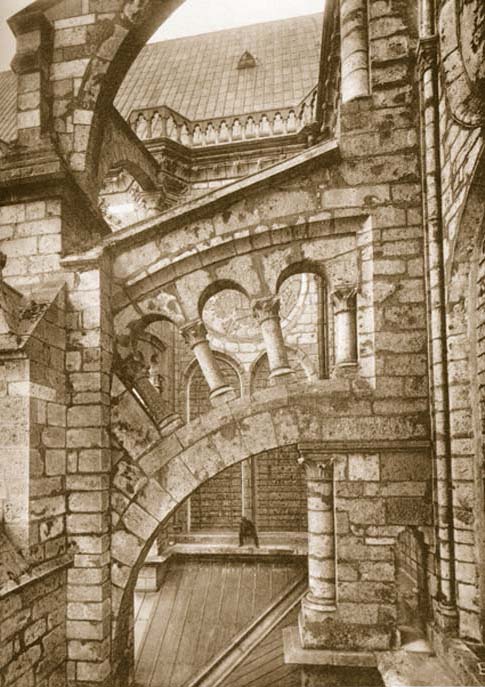
"We have good fathers, you and I" (Painter Alfred Manessier to his friend the actor Charles Laughton. Chartres Cathedral, 1959)

Those who have good parents, or good teachers, are blessed.

I must say that I have been fairly lucky in this regard, not unlike Charles and Alfred were by having known Etienne Houvet , or Albert Lory by having been tutored by professor Sorel.


"I must go not because I am harmful to society, which is you, but harmful to tiranny"


"Goodbye... Citizens!"


I just love the way Albert Lory puts his hands in his pockets, don't you? Josep thinks that the film could have ended in this scene, which I think is not a bad idea, cinematically speaking. Raúl has written a beautiful text in which he deftly delineates Albert's character.

Saturday, December 26, 2009

The Snowball Effect


Homeless cat, hospitable busker (St. Martin's Lane, 1939)

Elsa recollects at 81:
We always had a cat but we didn't ever go out and get a cat. Somehow the cats found us. When we moved to our house in Brentwood (1), one day we drove in and we heard a meeping and rustling in the driveaway, and eventually we fished out five kittens from the ivy. In Hollywood at least, if a poor family had a cat and it had kittens and they couldn't afford to have the mother cat "fixed", and they couldn't bring themselves to kill the kittens, they would put them in a basket and drop them in the gardens of the people who were better off. So we had cats. We kept them for a few weeks, all five, and we had five kittens chasing one another around the house–a great entertainment. It was much, much better than going to a ballet. Eventually we found homes for them all, except one–a ginger one–so this one was called "Mister Pinky" and he was considered Charles' cat. After that we always had ginger cats. For some reason, ginger cats always turned up.

Two doors away from the Brentwood house lived Henry Hathaway. He had an aunt and, I believe, a mother living there, two apparently rather deaf elderly ladies. One day their gardener told our gardener that "the Laughtons barbecue cats." We were infuriated. Tracing the atrocious statement to its source, we found that one old girl had said to the other, "You know, the Laughtons harbor cats," and the other deaf old girl heard "harbor" as "barbecue"

Oh yes, there's some distance between "harbor" and "barbecue", but it is a distance many a writer on films has covered easily, even breaking planetary records. As Greg from Cinema Styles put it here, "Of course, I have discovered through years of film study that 'History of the Movies' books are often poorly researched and repeat the same legends they've heard elsewhere without any verification", which is a good reason I not only read bibliography on Laughton, but bibliography on people and subjects related to him.

Many urban myths about Charles start like a little snow flake going down a slope and end like a big snowball. I have even read comments of people around Charles who probably ignored certain things about Charles when he was alive, but having learned new things about him after his death, they just "incorporate" the new information to their reminiscences of the man... Mind me: when a person had a close personal or working relationship with Laughton, it is very likely that they chose to keep some things to themselves while Charles was alive... But every then and now I come across some people's statements, not close to him in any way, whose reminiscences, or so it seems to me, carry a whiff of disingenuousness.

You may say, and you'll be right up to a point, that this is the price to pay for fame, but then we are talking of the old-style type of fame, the one who came along with merits and skills (not the present-day Paris Heelton attention-craving, empty type of celebrity, so to say). And since along these myths there is some stuff which is not only damaging to our subject , but also rather untrue, I recommend to be cautious about what you learn about people, all the more if there is no alternate view... And don't get me started about I-emm-dee-bees and wikis: the snowball gets bigger and bigger as the stories start to circulate online without people bothering to check the sources!


Wife. Husband. Utterly guileless sofa

I could mention, for instance, the story of a discarded sofa. Of how a wife decided to get rid of it because the seat brought the wife painful reminiscences: the sofa, you see, was associated to a marital infidelity.

Such story was recounted by the wife, many years after the husband's demise, she being the only, noncontrasted source....And allow me to add, she didn't actually watch the scene but -so she referred- was just briefed about the events, afterwards, through the husband's tearful confession. This story has enjoyed a number of retellings by third parties, some quite imaginatively amusing, one actually saying that the guilty sofa was burnt in a bonfire as if the wife were a fierce Inquisitor, and the sofa a doomed heretic.

Oh boy! I cannot wait to read the version of the story in which the wife burns the sofa, its guilty occupants (who in this version will be caught, of course, in fraganti) and the whole building while she laughs maniacally.

Sources and Notes
Elsa is quoted from her 1983 autobiography.

(1) The house at Brentwood was Charles and Elsa's first regular house at Hollywood in the 1940s, after they had been staying temporarily at the Garden of Allah.

Wednesday, November 11, 2009

The Cobblers at Tournai, 1919


"The Cobblers" performing Aladdin at Tournai. (Photo published on March 1st, 1919) They are all memberst of the 7th Northamptonshire Battalion except those where it is indicated otherwise. From left to right. Standing: Emperor: Private Parkings, Abanazar: Dr. Felton, Vizier: Sergeant Dr. Kelby, Policeman: Lance Corporal Bayley (13th Batt., Middlesex Regt.), Ni-cee (maid to princess): Sergeant-Major F. Hitch, Prince Peko: Private Redmond (9th Batt. Royal Sussex Regt.), Wishee Washee: Private Potter, Widow Twankey: Second Lieutenant F. Judge. Sitting: Princess Balronbadour: Private Hutson, Aladdin: Lance Corporal Pickering (13th Batt. Middlesex Regt.), Santa Luna, Slave of the lamp: Lance Corporal Wright

In 1936, by the time he was promoting "Mutiny on the Bounty", an interviewer asked Charles Laughton what made possible that, having been working in hostelry until barely seven years before, he could have turned into a succesful actor, and, not only that, to have become in that short span of time one of the most respected and sought-for actors in the world at the time.

Laughton's answer was it was a matter of chance, and cryptically added "It took a World War and an act of God" to make him an actor.

Adding a bit of explanation, explained that the "act of God" was his younger brother Tom: "he decided to go into hotel bussiness one day, so I said 'here, take this, I`m going to the stage". Tom Laughton's own version is more detailed, and tells us that Charles didn't enjoy his responsability as hotel manager, a responsability that had befallen him due to the fact that he was the first-born of the family. As opposed to that, he utterly enjoyed every minute of his spare time devoted to amateur theatricals in Scarborough. Charles' family didn't approve his theatrical enthusiasm, and wanted him to keep his mind only in hostelry. Then came Tom to intercede for his parents' cause. Thinking that he had a winning argument, Tom told Charles that he was lucky being the eldest, for he, as the second son, had no chances of inheriting the family hotel and had had to make a living in something else. Tom's strategy failed, as Charles happily seized the occasion to offer Tom his place on the family bussiness, and left to become an actor.

But what about the war? He just says, without much further explanation, that "The war shook me into considering acting as a life work", and one is left pondering: what did he exactly mean by that? One wonders if, having been told cautionary and disencouraging tales by his family about the precariousness of an actor's work (i.e. as opposed to the safer living of hotel bussiness), Charles found that there were ways of life far more precarious and uncomfortable than a thespian's, verbi gratia, that of the soldiers fighting a war. One also considers, on the other hand, if war had on him a similar effect it had on another another Great War veteran, the American painter Horace Pippin, who would declare about his own war experience that "The war brought out all of the art in me, I came home with all of it in my mind, and I paint from it today" (1)

A further clue, however is given by Laughton himself, who, discussing very briefly his time as a soldier, went on to single one experience of which he evidently held a fond memoir : "I saw Leslie Henson play in a pantomime in Lille- it was 'Aladdin'. He was damned funny as usual" . In fact, he would recall in a 1933 interview that "the performance kept alive my latent ambition (to become an actor)". Maybe this was it: the realization that, no matter the bitter experiences, or the glum surroundings, the theatre had the powerful effect of lifting one's spirit. So possibly Laughton reached the same conclusion than the eponimous character played by Joel McCrea in Preston Sturges' masterful film Sullivan's Travels".

But Leslie Henson wasn't the only one performing Aladdin in France around this time. It was also performed by "The Cobblers" a troupe formed by soldiers of the 7th Battalion of the Northamptonshire Regiment... which was the unit where Charles served in France.

But before talking further about "The Cobblers", we might as welll give a smattering about entertainment in World War One.


How the British soldiers were entertained (1914-1918)
Early in the war, the military authorities realized the potential of entertainment for the troops: for the young men in training at home, it offered a more wholesome alternative to spend their spare time than other less reputable ones like alcohol, gambling or prostitution. For soldiers at the fighting fronts, it was also a temporary respite from the harsh realities of trench warfare. For those convalescing from wounds, it was a welcome balm.

The provision of entertainment was often due to the initiative of relevant individuals: many famous actors and actresses of the day would put a show for the benefit of troops, tour in training camps, or in certain cases, even in the vicinity of the front lines, which they would do with the acquiescence of the military commanders. Such were the cases of Lena Ashwell , Gladys Cooper , Harry Lauder, Frank Benson or George Robey , to give just a few names.

On the other hand, there were profesional and amateur performers who were serving in the forces. Among the professionals, we have cases like Leslie Henson, who formed a touring troupe called The Gaieties, or Basil Dean, who would efficiently organize theatres and shows for the Army canteens. Dean and Henson would be the men behind the creation, in the following war, of ENSA, an organization which pertained to the forces, and provided the servicemen with entertainment. However, those serving in ENSA during Second World War worked exclusively as entertainers, whereas those profesional and amateur entertainers in khaki during First World War were'nt usually spared from their regular duties as soldiers (2): those working in a show might be excused from some military routines while preparing a spectacle, but not from returning to their duties once the curtain was down. The casualties at the front meant that the formation of these troupes could be quite variable. Because of this, there was a great empathy among performers and spectators: they knew what made them tick, and a bit of irreverence for humour's sake was tolerated, which provided an extra relief as well.

One of the almost mandatory and usual formations were the Divisional troupes: owing to the large number of men available in a Division (3), there was a good staple of talent to choose from. While the output of these troupes could be variable in quality , depending of the unit, it was usually a well appreciated relief. Commanders were keen on encouraging these performances, and giving some help to make the stagings possible, but the shows weren't officially sponsored, and this was even truer in smaller units (like Battalions). Thus, more often than not the troupes didn't have proper stages to perform in, or costumes... But, quite undaunted by that, they would creatively work to improvise them, quite often with very remarkable results.


There were no girls in the army, so "some of the boys showed how attractively they could be made up as girls". Two female impersonators of "The Cobblers", on the Left, Sergeant-Major F. Hitch, on the right, Private D. Hutson, or "Ida, the Cobblers' Girl", as he was alternatively known.

Since no there were no women in the army at the time, some of these performers in uniform would transform themselves into lovely ladies, not unlike the female impersonators of the Elizabethan theatre, or the Onnagata in the Kabuki Theatre. The best among these female impersonators would be quite sought after to perform, and could be real stars among their comrades.

The Cobblers

The Cobblers, with some Battalion officers (Circa 1916?). From left to right. Lieutenant A.F.T. Bullock, Sergeant Hunting, Captain H. Grierson, Lieutenant Durrant Swan, Lieutenant-Colonel Edgar Mobbs, Second Lieutenant Murray, Sergeant Wenn, Private Driver. Front Row Lieutenant Wharton, Corporal Chapman and Lieutenant Debenham.

Why was that troupe named "The Cobblers"? The 7th Battalion of the Northamptonshire Regiment was one of the Kitchener formations of the early war period. This Battalion was mostly formed by citizens from Northampton, a city known for its shoemaker industry, hence the nickname "The Cobblers" .

According to the available reference, the troupe was first formed in 1916. The battalion had already suffered grievous losses during the Battle of Loos in the previous year. Edgard Mobbs, the international Rugby player who had a relevant role in the recruitment of the Battalion (and who was by then commanding it) encouraged its formation, and even contributed to the programme of the Concert Parties. This early formation of the Troupe would entertain the Battalion and its visitors up to the Battle of the Somme, where the 7th Norhamptonshires would again suffer many casualties.

Lacking other information, we jump to February 1919, a few months after the armistice, when we met a new formation of The Cobblers performing "Aladdin" in Tournai to the benefit of the children of Belgian Soldiers (The soldiers not only entertained the kids but also fed them, with money provided by the Battalion's canteen funds)

It is not unlikely that the choice of the pantomime was due to the fact that Leslie Henson's Gaieties troupe had sucessfully performed "Aladdin" at the reconstructed Lille Theatre earlier in the winter of 1918-1919. It is to be wondered if Henson lent any costumes to the 7th Northamptonshires, even though by what is written about the performance, it seems that the men created imaginatively their own costumes with what they had at hand.

None of the members appearing in the 1916 formation of The Cobblers can be seen in the 1919 photograph. In fact, there are members from other battalions of the 73rd Brigade (to which the 7th Northamptonshires belonged) among the members of the cast... This illustrates quite well the many changes undergone by the battalion due to casualties since the creation of the troupe.

And where was Charles? Well, we certainly don't see him among the members of the cast appearing in the photograph, even though the accompanying article states that those appearing are only part of the cast... Being the stagestruck kid he was, I'd say that it is not unlikely that Charles was very eager to help, and I wonder if he didn't assist the troupe as a chorus boy, as part of a stage horse (or camel?), or a stage hand. At any rate he must have been, without a doubt, a very keen spectator.

This performance by "The Cobblers" must have been one of the last activities of the Battalion with Charles still there. The article covering the "Aladdin" performance was eventually reported in the Northampton Independent in March 1st, 1919, and Laughton had been demobilized in February 14th 1919. It can be said that the effort in benefit of those Belgian children certainly wasn't lost on Charles: a few years later, he and his fellow amateur performers from Scarborough would also perform to aid the League of Help, an association which gathered donations to help with the reconstruction of devastated French and Belgian towns and villages.

Notes
(1) Incidentally, Laughton would have some of Pippin's work in his art collection, prompted by his friend the collector Albert C. Barnes

(2) Cases like Leslie Henson or Basil Dean were, at the time, more the exception than the rule.

(3) Infantry Divisions had an establishment of up to 20.000 men (at full capacity: this number, of course, could vary due to casualties, etc.)

Thanks, ackowledgements and sources
The information and documentation about the Cobblers was kindly supplied to me by Ms. Kate Wills, who is a dedicated researcher on the subject of First World War and Entertainment. Apart from Mrs. Wills information, and old news pages from the Northampton Independent provided by her, This post's sources include an interview to Laughton by Patrick Murphy published in segments at The Sunday Express from November to December, 1933; A 1936 interview with Laughton appearing in Picturegoer's Weekly Supplement; Elsa Lanchester's 1938 book Charles Laughton And I; Tom Laughton's Pavilions By The Sea; L. J. Collins's comprehensive Theatre at War 1914-18 and David Woodall's "The Mobbs Own. The 7th Battalion, The Northamptonshire Regiment. 1914-1918"


Some links of interest
:: Charles Laughton's known First World War experiences at the Huntingdonshire Cyclists website, plus a little update on the matter in this 'ere blog.
:: You might also be interested in checking Horace Pippin's memoirs.
:: A good link on First World War entertainment, at the comprehensive site Great War and Different.